From vision to value: Unlocking benefits in precinct planning and delivery



Overview
In major urban development, ensuring that strategic precincts deliver multidimensional value is paramount. Benefits realisation is a strategic approach that bridges the gap between vision and outcomes. By defining, planning, and tracking benefits from business case through to project completion, projects are more likely to deliver on strategic objectives, optimise resource allocation, and ensure consistent delivery of both financial and non-financial outcomes. This integrated approach transforms the project vision into measurable and sustainable value.
Transformative urban renewal and strategic infrastructure projects are pivotal to shaping the future of our cities. They drive economic growth, enhance liveability, and foster sustainable communities. However, realising transformation requires aligning intentional and coordinated planning with focused implementation. The journey from concept to completion is long and often fraught with complexities and challenges, demanding a strategic approach that goes beyond traditional project management and is sustainable throughout the entire project lifecycle.
In this perspective, we explore eight strategic advantages of implementing a Benefits Realisation Management Plan (BRMP), as well as provide practical guidance for designing an effective framework to ensure complex precinct planning and delivery is holistic, integrated, and delivers generational legacy value.
The power of a Benefits Realisation Management Plan
Effective BRMP implementation is critical to ensuring integrated and complex major projects meet their immediate objectives but also deliver long-term value at the city, region, and community level.
They identify, quantify, plan, manage, evaluate, and optimise the benefits of a project throughout its lifecycle, and ensures that project delivers on and sustains the intended outcomes.
By providing a framework to systematically monitor and review project impacts, a BRMP provides a clear roadmap for enhancing overall project performance. It ensures that investment and implementation activities align with the strategic objectives of the project and deliver tangible value to all stakeholders – aligning interests and maximising the return on investment for both public and private entities.
A comprehensive benefits realisation strategy is ideally prepared during the business case or project initiation phase and will comprise a benefits realisation framework and implementation plan.
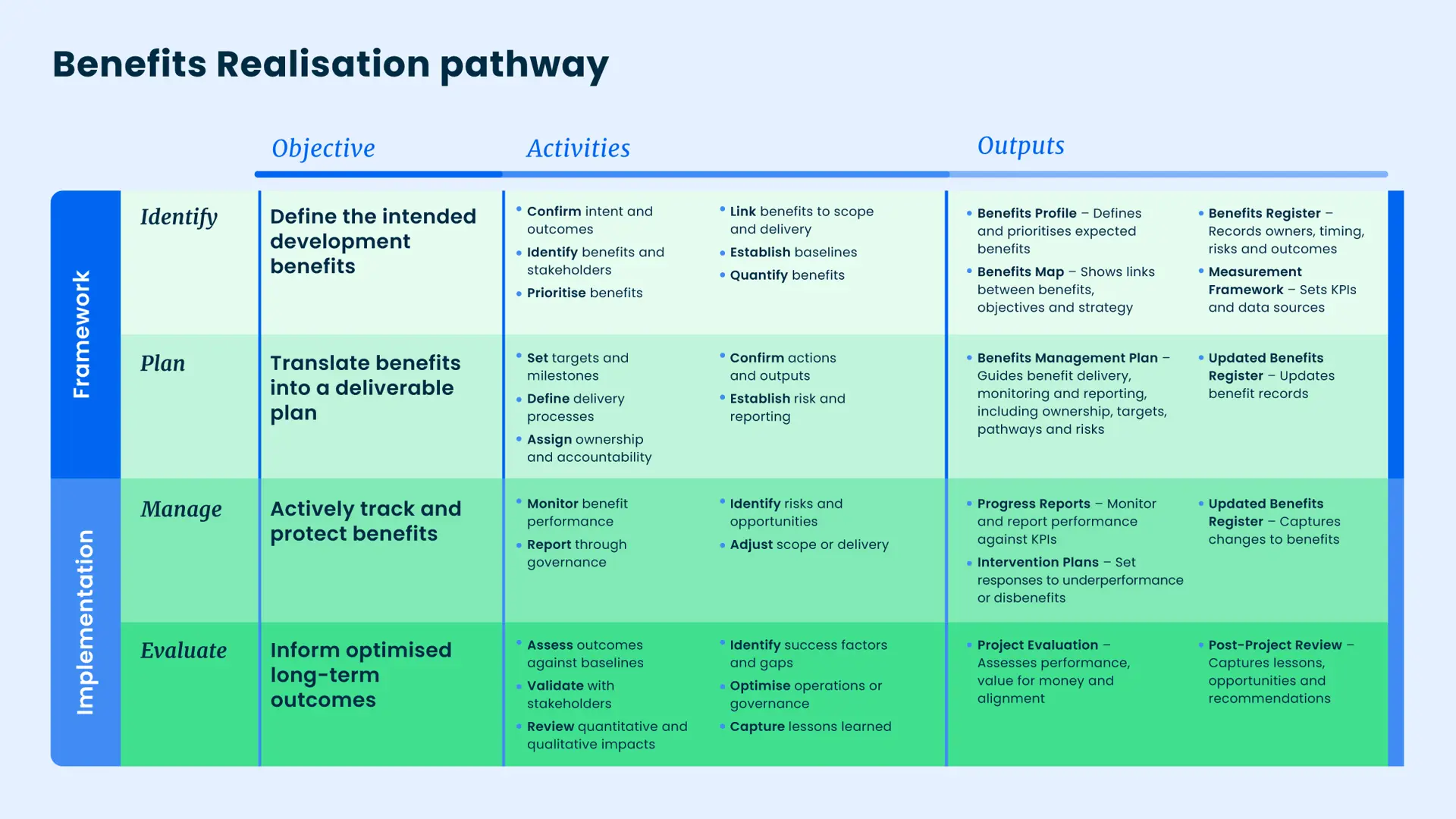
Figure 1 demonstrates benefit dynamics and interdependencies across a project program.
Benefits realisation framework
The benefits realisation framework identifies and quantifies performance metrics, organised by category and prioritised by the project's strategic goals. It provides a baseline of evidence to guide decision-makers, aligning project activities with strategic objectives. It optimises resource allocation, ensures continuity and accountability, and links implementation activities with long-term success measures.
Benefits measurement must be an objective process. If benefits cannot be monitored and measured in a quantifiable manner, they should not be included in the benefits realisation framework.
To maximise return on investment, an effective framework will look beyond the immediate project delivery program to identify broader economic, social and environmental opportunities that support the strategic business case and deliver value long after project completion.
Embedding benefits realisation from the business case stage shifts projects from short term delivery to long term value creation. It enables decisions to be tested against their contribution to liveability, resilience and intergenerational impact.
Eight advantages of Benefits Realisation Management Plans
- Optimise liveability outcomes
A BRMP enhances project outcomes by setting clear targets to maximise return on investment. The BRMP can be tailored to ensure key performance indicators encompass broader urban outcomes that address social, economic and environmental dimensions alongside direct project impacts. - Long-term legacy and intergenerational impact
An effective BRMP framework can promote long-range thinking that supports intergenerational impact and mitigates against short-term decision-making. Identifying and quantifying the evolution of urban environments over the project lifecycle is important for enabling the latent opportunity of the project and capturing the full spectrum of benefits. - Equitable distribution of benefits
A BRMP enables the social, economic and environmental value created by a major project to be shared equitably across all stakeholders. It prioritises inclusive planning, measurable outcomes, and targeted actions that can support the distribution of benefits to disadvantaged groups and local communities. - Supports outcomes-based funding models
A comprehensive BRMP supports outcomes-based funding models, creating incentives for capital investment and demonstrating alignment with broader state or national policy and funding criteria. - Improved decision-making
A BRMP enhances decision-making by leveraging data-driven insights to prioritise activities and allocate resources effectively. Clear articulation of intended outcomes across environmental, social, economic, and urban dimensions provides guidance to decision-makers that can support options analysis, risk management, scenario planning, and delivery approaches. Establishing clear KPIs allows for progress tracking and informed decision-making, including necessary course corrections. - Increased stakeholder alignment and confidence
The BRMP fosters stakeholder alignment and confidence by presenting a unified view of long-term success, demonstrating tangible value to investors, government bodies, and the public. It reflects a shared understanding of the project's end state and objectives, co-created and committed to by key stakeholders. - Sustained collaboration and embedded institutional arrangements
A BRMP fosters a culture of sustained collaboration by establishing governance structures and institutional arrangements that collectivise resources, align stakeholder efforts and foster collaboration across government departments and agencies, and amongst the private sector ensuring a coordinated approach to addressing complex issues. It ensures that all parties are working towards common goals and that resources are effectively managed and utilised. - Risk Management
The BRMP enhances risk management by enabling the early identification and mitigation of potential issues. This proactive approach involves regular risk assessments and the development of strategies to address challenges before they escalate. On-going monitoring enables sub-optimal benefits to be identified early and addressed. The BRMP can be used as a recovery action, or to refocus programs to deliver priorities and enables continuous improvement and feedback loops.
For governments, benefits realisation is no longer optional. It is essential to demonstrating accountability, supporting outcomes‑based funding, and ensuring public investment delivers enduring value for communities and governments, not just completed infrastructure.
How to design an effective Benefits Realisation Management Plan
There are several key considerations when developing an effective BRMP to maximise the impact of your projects and support strategic decision-making.
Sequencing and Timing
The long-term nature of major project programs means that benefits will be realised progressively over time. It is important to understand and demonstrate to stakeholders how project outputs lead to specific results, highlighting the logical sequence of cause-and-effect relationship dynamics.
Expressing program benefits in terms of short, medium and long-term outcomes is essential for effective benefits management in this context, for capturing interim benefits and establishing causal links between project outputs and outcome.
Benefit hierarchy
An effective benefits framework should be structured in a way that reflects the hierarchy and interdependencies between project outcomes. Hierarchical prioritisation of catalytic outcomes can enable other benefits to be realised and/or compounded over time.
Improved connectivity can be an example of this as it can unlock increased productivity and economic growth, as well as better liveability.
Improved connectivity between workers and employment nodes can contribute to intermediate outcomes, such as better skills matching, and ultimately lead to long-term outcomes, such as increased business competitiveness and labour productivity.
This hierarchy and interrelatedness should be acknowledged in the framework structure, with explicit linkages between key performance metrics.
Capturing the full range of benefits
For major urban projects at the city or precinct scale, focusing on diverse benefit categories like connectivity, sustainability, liveability, productivity, resilience, and wellbeing can facilitate better decision-making, prioritisation and resource allocation, ensuring a project realises value beyond economic and financial metrics.
An effective BRMP will also recognise the long-term nature of the project while emphasising the importance of short- and medium-term interim outcomes throughout various phases of development and activation.
Establishing a baseline or counterfactual
Establishing a baseline of evidence as the starting point from which project outcomes can be measured is fundamental to benefits management, evaluation and assessment. A counterfactual can also serve as a valuable tool for comparing the actual outcomes/benefits of the program to the hypothetical outcomes that would have occurred if it had not been implemented. This comparison can help to assess the benefits as well as identify any unintended consequences.
Management and governance
Establishing robust governance structures is crucial to manage and sustain benefits over time. This includes defining roles and responsibilities, creating oversight mechanisms and ensuring accountability. Governance structures should facilitate effective communication, decision-making, and risk management. They help maintain focus on the project's goals, ensure compliance with policies and standards, and support the ongoing realisation of benefits.
Benefit map
A benefit map visually represents the relationship between project activities, outputs, and the desired outcomes. It helps stakeholders understand how the project's deliverables contribute to achieving strategic objectives. The benefit map outlines the cause-and-effect pathways, linking specific actions to their anticipated benefits. This tool is valuable for planning, monitoring, and communicating the benefits realisation process.
Transfer of responsibility for benefits realisation
Transferring responsibility for benefits realisation from the program to Business as Usual (BAU) or operational management is a critical step. This ensures that the benefits continue to be realised and sustained after the project has been completed. The transfer process involves integrating the new capabilities into regular operations, providing necessary training, and establishing ongoing support mechanisms to maintain the momentum of benefits realisation, noting that the strategic benefits are often not yet realised at the time construction is complete .
A knowledge precinct with purpose: university-led regeneration at Kings Cross
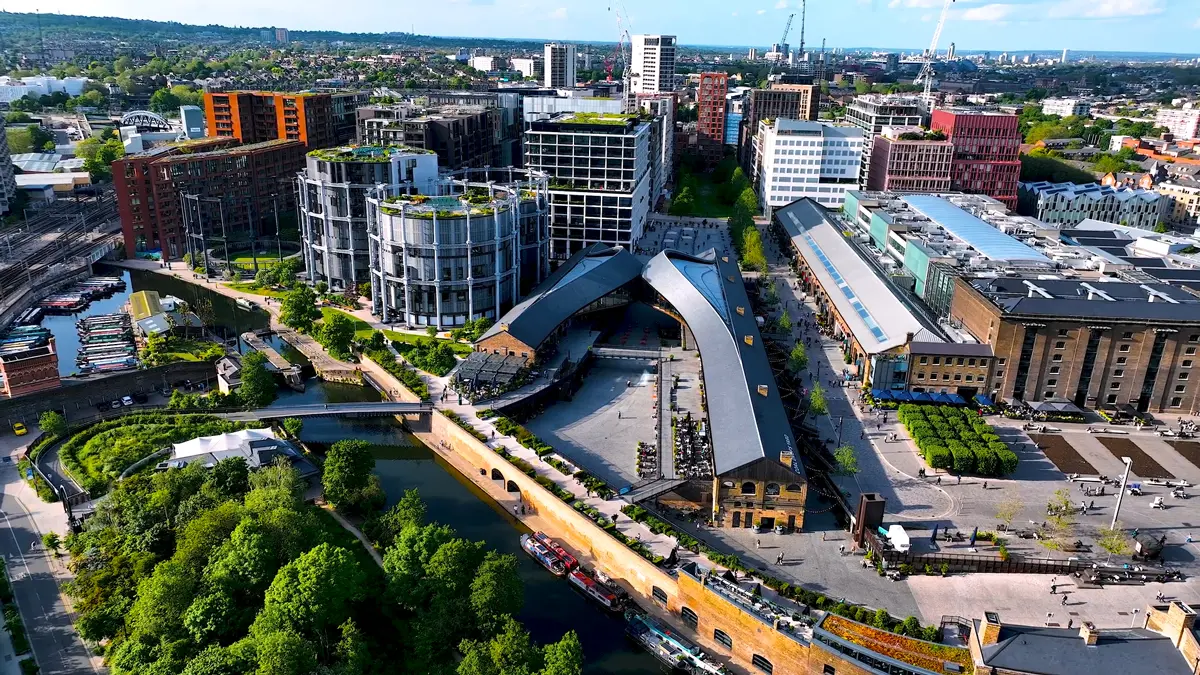
University-led precinct regeneration at Kings Cross demonstrates how major knowledge institutions can anchor inclusive, long-term urban transformation when benefits are defined upfront and actively managed. The Kings Cross Central regeneration set explicit social and economic outcomes, including up to 30,000 new jobs, with targets for around 40 percent to be filled by locals through employment brokerage, skills training and partnerships with education providers.
Benefits realisation was embedded through partnership agreements that link development phasing to planning obligations, community facilities, affordable housing and local labour initiatives, supported by long-term estate management arrangements. Crucially, evaluation has extended beyond headline economic outputs to monitor displacement and gentrification risks, using indicators on local employment, social mix and access to community infrastructure to inform adaptive decision-making. This approach illustrates how universities can act as civic anchors, aligning growth with social value and sustaining public confidence in large-scale regeneration.
From courts to civic place: Salisbury Square as social infrastructure
London’s Salisbury Square Justice Quarter illustrates how a clear benefits-led approach can underpin complex civic redevelopment in dense urban environments. Led by the City of London Corporation, the project brought together the courts system, City of London Police and associated justice functions into a consolidated justice campus, with explicit objectives around operational efficiency, public realm improvement, and long-term civic value.
Benefits realisation was embedded through development and partnership agreements that align construction phasing with planning obligations, heritage conservation, public access and long-term estate management. Alongside delivering modern, fit-for-purpose justice facilities, the scheme has focused on improving pedestrian connectivity, activating ground-floor uses and enhancing the surrounding streetscape to support the wider Fleet Street and Square Mile economy.
Evaluation extends beyond delivery of the core justice infrastructure to consider wider economic and social impacts, including footfall, business vitality, and the quality and safety of public space. Ongoing monitoring enables adjustments to balance security requirements with openness and urban integration, demonstrating how major civic developments can modernise essential services while reinforcing the character, accessibility and resilience of the city centre.
Turning vision into enduring value
The true measure of success in precinct planning and delivery lies not only in the completion of physical infrastructure, but in the sustained economic, social, and environmental value it generates for decades to come. Benefits realisation is the discipline that ensures this happens – transforming ambition into tangible outcomes, and outcomes into legacy.
For governments, investors, developers and institutions, embedding a Benefits Realisation Management Plan (BRMP) from the outset is no longer optional; it is a strategic imperative.
The opportunity before us is to move beyond delivering projects as isolated undertakings, and instead deliver integrated, generational change. By making benefits realisation a core part of the project lifecycle – from business case to long-term operations – we can ensure that precincts are catalysts for inclusive growth, improved liveability, and environmental resilience.
We work with clients to design and implement benefits realisation frameworks that are practical, evidence-based and tailored to the unique dynamics of each project. Together, we can ensure that the vision for our cities is matched by the value they deliver – today, tomorrow, and for generations to come.
Read about the six factors critical to the success of a precinct in Dr Kate Meyrick's perspective: From Ancient Egypt to Brisbane 2032: six components of precincts.