The four core principles underpinning co-design with community


Five weeks. Eight cities. More than 300 architects and built-environment professionals in conversation across the country.
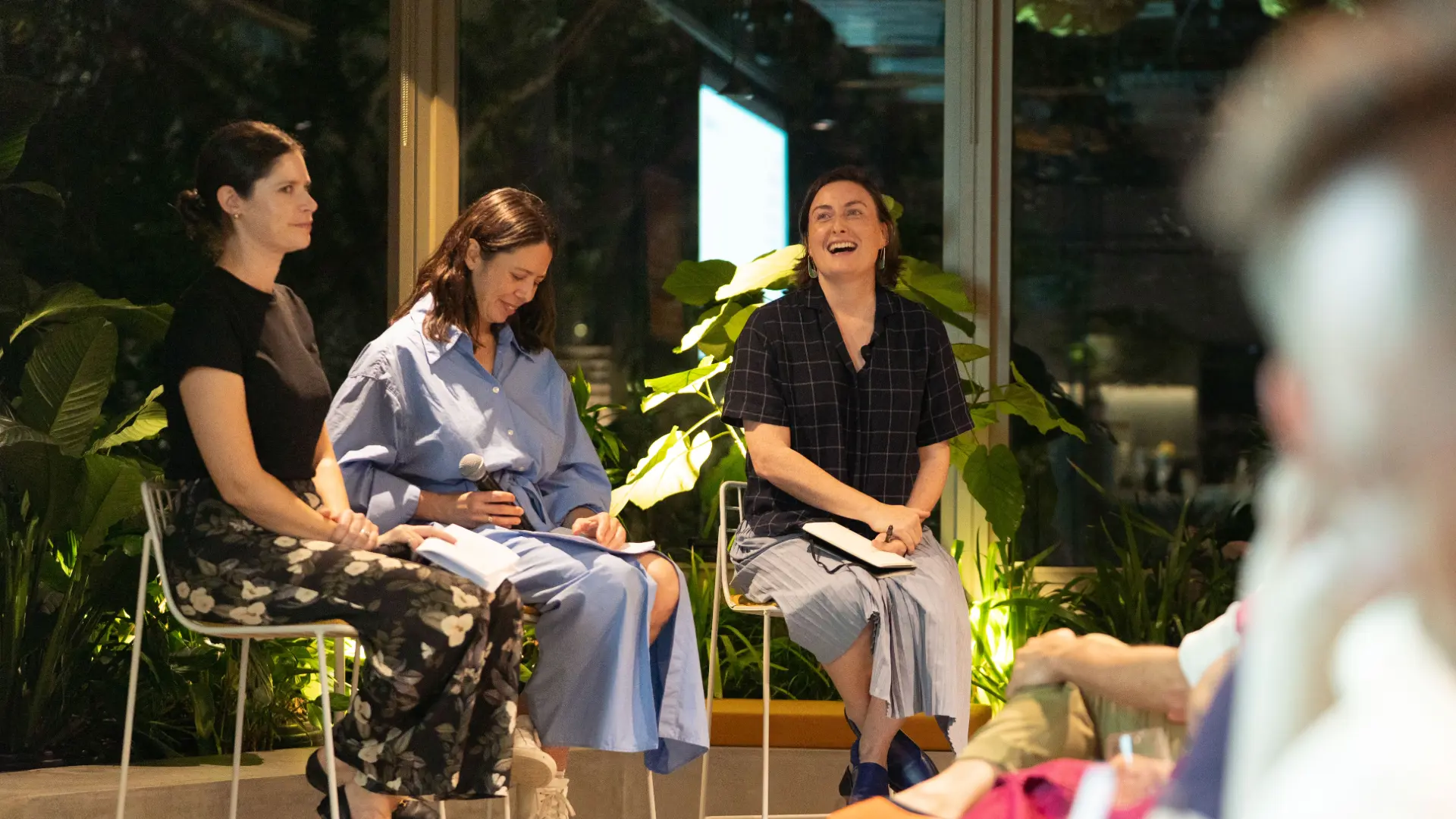
As the National Emerging Architect of 2025, I embarked on an energising, generous, and at times challenging tour of capital cities for the Australian Institute of Architects in March 2026. Each city had its own flavour and each local emerging architect winner I was privileged to speak with brought their own practice, values, and experience to the conversation.
In every state, one question repeatedly surfaced: how do we genuinely listen to communities while working within project timeframes, budgets, and other constraints?
My answer was unchanging. Co-design is not an optional add-on or a risk to program certainty. It is something I build into every proposal, methodology, and scope from the outset.
As an architect with a background in research, now working across strategy and policy, my aim is straightforward: the people affected by a strategy, policy, or design should be part of shaping it. Co-design provides a framework to do this in a deliberate, rigorous, and transparent way.
Engagement is essential, but it is not the same as co-design. Engagement often involves seeking feedback on ideas that have already been developed. Co-design is a collaborative process where people with lived experience are partners in defining the problem, setting priorities, and designing solutions from the start. It shifts practice from “doing to” or “doing for” towards “doing with” the community members who wish to be involved. This might look like including local youth on the design of a new public space in front of the local library, engaging social housing residents as advisors in the creation of design guidelines, or involving students and teachers in the briefing and design review process of a new school building.
There is no lack of excellent guidance on how to approach this work. Drawing on these resources (such as Queenslanders with Disability Network Co-Design Principles and the AIATSIS Code of Ethics) and my own practice, I return to four core values that underpin effective co-design.
1. Do your homework
There is almost always existing work on the topic, place, or community with which you are engaging. Failing to understand this context risks repeating past efforts and wasting people’s time.
In Hobart, Tasmanian Emerging Architect Prize winners Liz Walsh and Alex Neilson of So. Architecture reflected that places change people.
Homework is not just about gathering data, it is about arriving informed to ask better questions, humble enough to recognise that the place itself, as well as the people whose lives it has shaped, are the primary sources of knowledge.
A desktop review of academic research, media coverage, and peak body publications provides an important foundation and identifies local experts with trusted relationships in the community. These local champions - whether active community members, practitioners, or researchers - can add significant value as advisors, governance group members, peer reviewers, or as part of the project team.
Taking the time to understand what already exists is both respectful and practical.
In Melbourne, Victorian Emerging Architect Prize winners Stephanie Kitingan, Jacqueline O'Brien and James Flaherty of Placement Studio described their briefing process as reaching toward the intangible by starting with clients’ histories and future potential before they get to any design problem. Answering their question, “What do our clients need that they don’t yet realise?” is a good test of whether desktop reviews have gone far enough.
2. Establish appropriate governance
Projects impacting community should include community representation in decision making. Frameworks such as the IAP2 Spectrum of Public Participation are useful in clarifying the intended role of the community, from informing through to empowering. Whatever level is chosen, governance arrangements need to be clear. This includes defined authority, agreed terms of reference, and appropriate remuneration.
In Darwin, Northern Territory Emerging Architect Prize winner Maiya McKenna of Rossi Architects described five years of relationship-building with Larrakia representatives as part of the design, documentation, and construction of the Larrakia Cultural Centre, a process of genuine two-way trust that shaped every decision on a complex and challenging project. This relationship is an outcome in and of itself.
Strong governance supports culturally safe and effective outcomes.
It also reduces risk by allowing community representatives to test the methodology, engagement approach, interpretation of findings and draft outputs as the project progresses. This helps avoid misalignment, cultural harm, reputational risk, and late stage rework.
Governance should be established early and clearly set out roles, responsibilities, decision making processes, how input will be reflected in final outputs, membership, meeting cadence, and secretariat support.
In Canberra, a conversation around density and flexibility was supported by Australian Capital Territory Emerging Architect Prize winner Mark Brooks of MyMyMy Architecture’s provocation: “How can you set a design up for a future that you don’t know, leaving space for things that you get wrong and allow for editing?”. Good governance asks the same question of co-design processes, that is, building in the capacity to adapt as community input reshapes the brief.
3. Value lived experience
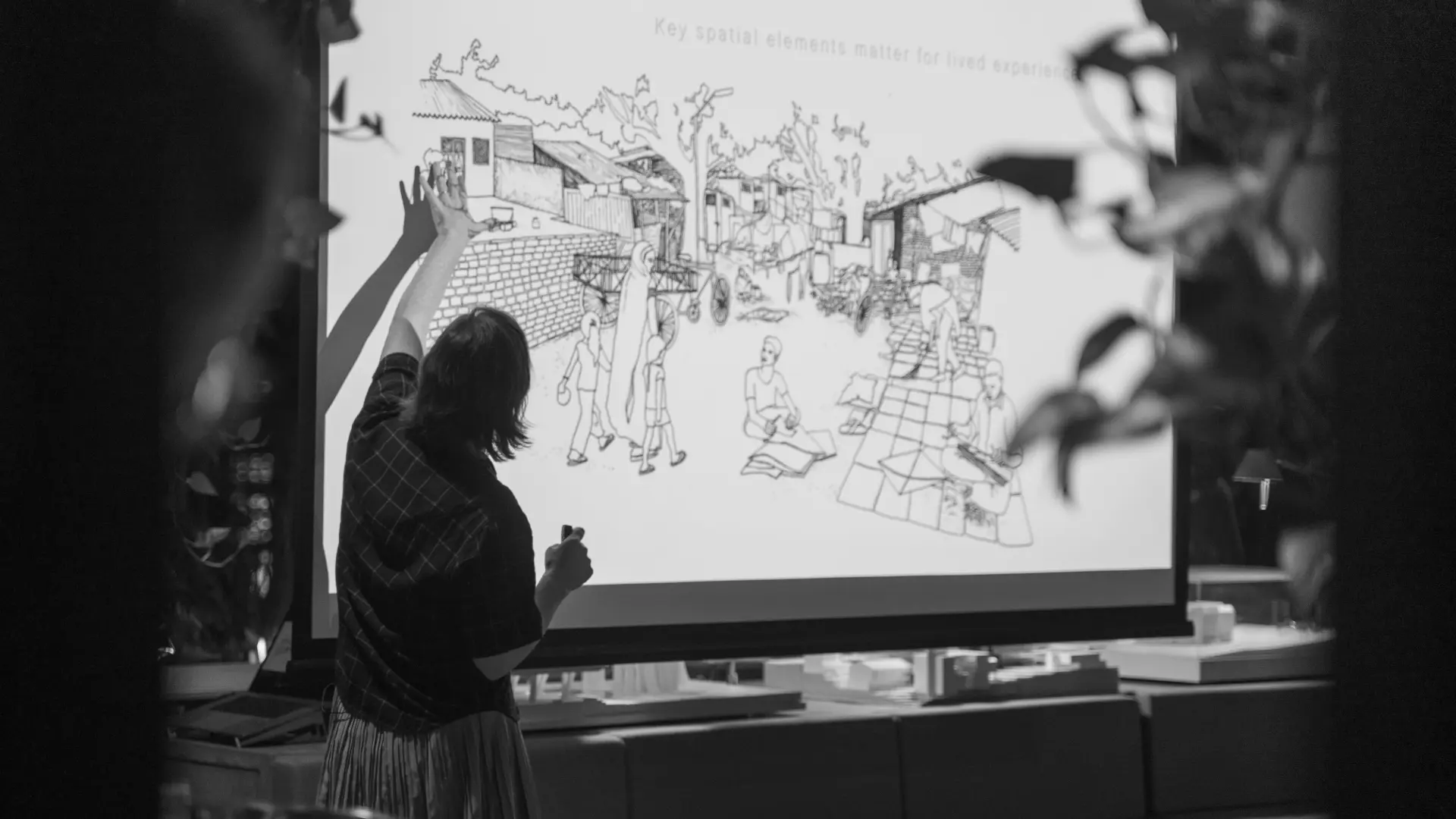
People with lived experience have firsthand experience of the particular spaces or context being designed. This could be a person with disability using public transport, a person who has lived in social housing, or an educator using different learning environments.
In Sydney, the conversation highlighted a gap between genuine co design and what the profession sometimes treats as “tick and flick” consultation – where communities, particularly those already navigating disadvantage, are asked questions but their answers are ignored.
New South Wales Emerging Architect Prize winner Gabrielle Pelletier of Sam Crawford Architects spoke about creating processes that allow teams to interrogate the brief at the start of a project. This thinking applies as much to how we structure engagement as it does to how we design buildings. Whose availability, communication style, and definition of participation are our processes designed around? It is our responsibility to ensure decisions that affect people’s lives are made with them, through engagement designed to suit those involved.
Lived experience is expertise and should be recognised as such.
This includes acknowledging contributions through payment and reimbursement. Engagement and co design should be grounded in respect and dignity, accessibility and inclusion, transparency and accountability, collaboration, and commitment to learning and improvement.
Creating the conditions for people to contribute meaningfully requires thoughtful planning. Engagement activities must be accessible, communication must be clear, and feedback must be taken seriously and reflected in decision-making.
4. Build on what’s already good
Every community has existing strengths, initiatives, and places that matter, no matter how disadvantaged or marginalised outsiders perceive them to be. Interventions are more effective — and more trusted — when they build on these foundations.
Space plays a critical role in social capital and community resilience. Informal and formal places alike support the everyday encounters through which trust and cooperation are built. Identifying and valuing these locally recognisable spaces helps ensure they are protected and strengthened through change.
Resilience focused work therefore depends on methods that surface existing social and spatial practices. In many cases, communities themselves are best placed to identify these assets. Doing so builds shared understanding and supports outcomes that reinforce, rather than disrupt, what already works.
In Adelaide, South Australian Emerging Architect Prize winner Gabrielle Seymour of Baukultur spoke about the regenerative potential of architecture and the importance of social impact being embedded in how practices operate, not just what they deliver. Similarly in Perth, Western Australian Emerging Architect Prize winner Emily Duncan of Woods Bagot described how clarity of design narrative and communicating intent simply and confidently to every stakeholder is what allows a project to hold its integrity under pressure. That principle applies directly to co-design: when communities understand the intent and can see themselves in it, they become advocates for, rather than obstacles to, the outcome.
Improving design processes creates places where people belong
Co design is not about slowing projects down or relinquishing professional responsibility. Done well, it improves the quality, legitimacy, and durability of outcomes. It reduces risk, builds trust, and produces strategies and designs that are more likely to succeed over time.
The conversations on the Emerging Architect Prize Tour reinforced that many practitioners are grappling with similar questions. Co-design offers a practical, values-driven way to respond, one that respects lived experience, strengthens communities, and ultimately leads to better cities and towns.
Dr Kali Marnane was awarded the 2025 National Emerging Architect Prize. As part of the award, Kali embarked upon a national lecture tour from March-April 2026, visiting each Australian capital city. Find out more about the prize here.